Solar system fault signs and when they are a safety risk
By Clara Tan · Updated 2026-07-06
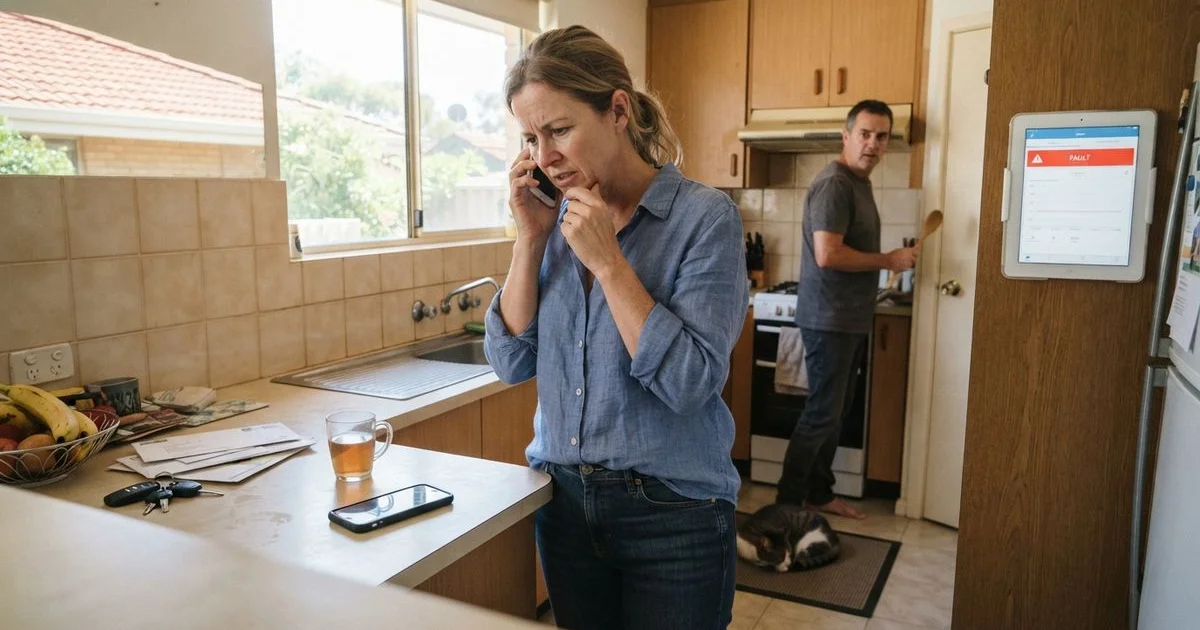
If you see damage to your solar system or smell burning, contact a licensed electrical contractor or your installer, and call 000 if there is smoke or fire. If any part of the system is damaged, do not try to turn it off. The rest of this page covers the signs that point to a fault, the low-output days that are not a fault, and why a Perth system can go quiet for a short stretch on a sunny day.
This is general information, not electrical or legal advice.
What to do first
- Smoke or flames. Get out, do not go back in, call 000 and wait for firefighters, as DFES says for a fire in the home. DFES also says not to use water on an electrical fire. Its general electrical fire advice includes turning off the power if it is safe to do so, but the WA Government’s solar advice below says not to attempt to turn off a damaged solar system, so do not go back inside to do it. If you have a home battery, tell the operator a battery system is involved, per DFES’s battery advice.
- Anything damaged. The WA Government says not to attempt to turn a solar power system off if any of its components are damaged. Contact your licensed electrical contractor or installer for advice. The panels keep generating voltage during the day even if the mains is off.
- A burning smell, nothing visibly damaged. Contact your licensed electrical contractor or installer. If you need to shut the system down and no component is damaged, follow the procedure located at the inverter or on the main switchboard. The WA Government warns that skipping it may damage the system.
- Roofs and repairs. The WA Government says serious electrical risks sit on roofs and in ceiling spaces, that the cables from the panels to the inverter stay live while the panels generate, and that you should never attempt electrical repairs yourself.
- Who to ring. Your retailer or installer first, with the manufacturer as the fallback, according to energy.gov.au. Building and Energy, which provides the WA Government’s solar page, lists 1300 489 099 and [email protected] as its contact details.
Recalled DC isolators
Fires caused by faulty DC isolator switches have led to recalls of these brands, according to the WA Government: AVANCO, SPM, NHP, Gen3, PVPower, ISO Max and HGN4. Check a brand and model number under the electrical category at Product Safety Australia. If your isolator has been recalled, follow the shutdown procedure, stop using the system immediately and call your licensed electrical contractor or installer. If you are not sure which brand you have, contact your installer.
Signs of a fault and what to do
| Sign | What it is | What to do |
|---|---|---|
| Smoke or flames | A fire | Leave and call 000 |
| Cracked or chipped panel, damaged cable insulation, water seepage, corrosion, storm damage | Damaged equipment | Do not attempt to turn the system off. Contact your licensed electrical contractor or installer |
| Burning smell, nothing visibly damaged | A possible fault | Contact your licensed electrical contractor or installer |
| A recalled isolator brand | A recall | Follow the shutdown procedure, stop using the system, call your contractor or installer |
| Fault code on the inverter or in the app | A possible fault | Contact your retailer or installer. Within the warranty period the check should be free |
| Output lower than usual on sunny days | A possible fault | Rule out shade and dirt (next section), then contact your retailer or installer |
REC, a panel maker, warns in its cleaning guide that damaged panels can present a lethal shock hazard from leakage currents, worse when they are wet. That is about REC’s own panels.
Low output is not always a fault
Energy.gov.au says output varies with the season and weather, and that lower than usual on sunny days may mean something is wrong. Shade also lowers output, and panels tend to get more of it in winter and early and late in the day. YourHome says anything covering even a tiny part of a panel can reduce output. Only a qualified person should clean panels, says energy.gov.au, because cleaning your own can be dangerous.
Perth adds a second cause. Since 14 February 2022, Synergy says, new and upgraded rooftop systems with an inverter of 5 kW or less in its buyback scheme must be able to be switched off remotely. Synergy tests this once a month, usually for between 15 minutes and an hour, and says it publishes every test and event on its website and in My Account. Energy Policy WA says WA has never needed to use the function outside routine testing, and that systems installed before that date do not have to comply unless upgraded.
If your system goes quiet for a short stretch, check those lists before you assume a fault. If the times do not match, ask your retailer or installer to check it. The maintenance and monitoring advice we link gives no figure for how big a drop counts as a fault, so we cannot give you one.
What your monitoring app can and cannot show
YourHome says inverter apps generally report the overall performance of the system, while microinverters, or optimisers with premium subscriptions, may provide data down to the panel level. Energy.gov.au says string inverter monitoring shows the total system and sometimes individual strings, which are groups of panels, and that microinverters let you monitor individual panels.
So with a string inverter and no optimisers, the app generally shows how much the whole system is producing, not which panel is weak.
Energy.gov.au also says most apps tell you about a fault, though for some this covers only inverter error states. It suggests asking your installer roughly how much daily generation to expect at different times of the year.
After a storm
DFES says storms are most frequent in WA’s south west, south of Geraldton, from May to October, with strong winds, hail and lightning among the hazards. The Clean Energy Regulator lists hail and wind among the causes of damage to a solar system.
The WA Government says the system should be shut down before anyone accesses the rooftop, gutters or panels, and that it is best to leave all solar maintenance to electricians and installers. So we only ask you to look from the ground. If you can see damage, use the table above.
Checks and servicing
The sources give different intervals. The Clean Energy Regulator says to get someone to check the system is safe every year, using a licensed electrician accredited by Solar Accreditation Australia, and that it does not regulate maintenance. The WA Government says annually or as the manufacturer recommends. Energy.gov.au says you could service it every 2 years. Annual is stricter. Our solar panel system cost guide covers ongoing costs.
The regulator and the WA Government both say a check should confirm that the shutdown procedures are clearly displayed and that nothing blocks access to the isolator switches. Look for the shutdown procedure at the inverter or main switchboard before you need it. If you cannot find it, ask your installer.
How we checked this page
We opened every government, regulator, utility and manufacturer page linked above on 20 October 2026 and checked each statement against it. The WA Government solar page was last updated on 26 November 2024, the Clean Energy Regulator page on 18 September 2026 and the Energy Policy WA page on 4 August 2026. The energy.gov.au, DFES, Synergy and REC pages show no update date. Rules and recalls change, so check the linked pages.
Rankings in this directory come from our published scoring method, which uses public Google review data. We do not test products or verify installations.
Frequently asked questions
Should I switch my solar system off if I think it has a fault?
Not if any component is damaged. The WA Government says not to attempt to turn a damaged system off and to contact your licensed electrical contractor or installer for advice. If nothing is damaged and you need to shut it down, follow the procedure located at the inverter or on the main switchboard.
Is the roof wiring safe once I turn off the power at the switchboard?
No. The WA Government says panels keep generating voltage during the day even if the main power is disconnected, and that the cables from the system to the inverter stay energised with the main switch off.
Can my app show me which single panel is weak?
Only if your system has microinverters, or optimisers with a premium subscription, which may provide panel-level data, according to YourHome. A standard string inverter app generally reports overall performance.
How do I check an electrician or installer?
The WA Government has an online licence search and says electrical contractor licence numbers start with EC and electrician licence numbers start with EW. Solar Accreditation Australia has an accreditation status check you can search by number or name.
Questions people ask
- How do I know if my solar system is underperforming?
- Compare your system's output on similar sunny days across different times of year using your monitoring app. A sudden or gradual drop compared to your own system's history is more reliable than comparing to a neighbour's different system.
- Does a red light on my inverter always mean an emergency?
- Not always, but it does mean something needs checking. Consult your inverter's manual or app for what the specific light or code means before deciding how urgent it is.
- Can I check for solar faults myself?
- You can safely check your monitoring app and note down any error codes or performance drops. Physical inspection of panels, wiring or the switchboard should be left to a qualified person.
- How often should a working system be checked even without an obvious fault?
- Many suppliers recommend a periodic check every couple of years, sometimes more often for systems in dusty or coastal areas, even if nothing seems wrong day to day.